
Proposed Capital Gains Tax Change Could Benefit Staten Island Homeowners

Could Homeowners Soon Keep More of Their Home-Sale Profit?
Proposed federal legislation could increase the home-sale capital gains exclusion, potentially allowing qualifying homeowners to retain more of the equity they have built over time.
The current federal exclusion generally remains up to $250,000 for a qualifying individual and up to $500,000 for qualifying married taxpayers filing jointly.
For many longtime Staten Island homeowners, decades of appreciation have created substantial equity. That is welcome news—until the possibility of capital gains taxes becomes another consideration in deciding whether it is time to sell.
Federal lawmakers have introduced proposals that would increase the amount of gain qualifying homeowners may exclude when selling a primary residence.
One proposal, known as the More Homes on the Market Act, would double the general federal exclusion amounts and provide future adjustments for inflation.
Supporters believe updating the limits could help longtime homeowners downsize, relocate or move closer to family while also encouraging additional homes to enter the housing market.
What Staten Island Homeowners Should Remember
The proposed higher exclusion amounts are not currently in effect.
It does not apply to the home's full selling price or every dollar received at closing.
Eligibility, adjusted basis and potential taxes require individualized professional review.
What Is the Home-Sale Capital Gains Exclusion?
When an eligible homeowner sells a primary residence, federal tax law may permit a portion of the gain to be excluded from taxable income.
Under current federal rules, the maximum potential exclusion is generally:
- Up to $250,000 for a qualifying individual taxpayer
- Up to $500,000 for qualifying married taxpayers filing jointly
The exclusion applies to qualifying gain. It does not apply to the home's entire sale price.
Sale price and taxable gain are not the same.
Calculating gain may involve the original purchase price, qualifying capital improvements, adjusted cost basis, certain selling expenses, depreciation and other factors. A qualified tax professional should calculate the potential taxable gain.
Current Law Compared With the Proposal
Why Are Lawmakers Considering an Increase?
The current exclusion amounts have remained unchanged since 1997, even though home values in many parts of the country have increased substantially.
A homeowner who purchased a Staten Island property decades ago may have accumulated a significant gain even though the property was never considered an extravagant or luxury home.
Supporters of the proposal contend that outdated limits may discourage some longtime homeowners from selling. An owner may want to downsize, move closer to family or relocate for retirement, yet hesitate because part of the accumulated gain could potentially be taxable.
Raising the exclusion could potentially:
- Help longtime homeowners retain more accumulated equity
- Make downsizing more practical for some older homeowners
- Encourage additional properties to enter the housing market
- Create more options for buyers seeking larger homes
- Allow owners to make decisions based more on lifestyle needs
Why Longtime Staten Island Homeowners Are Watching
Staten Island includes many homeowners who have remained in the same property for 20, 30 or even 40 years. A home purchased decades ago for a fraction of its current value may now represent a substantial portion of the owner's retirement equity.
A separate proposal, the Nest Egg Protection Act, has also been introduced. That measure focuses on qualifying senior homeowners and is separate from the broader proposal that would double the general exclusion.
Neither proposal should be treated as current tax law unless and until it is enacted.
Why This Could Affect Housing Inventory
Some homeowners remain in properties that no longer suit their needs because selling may create financial, logistical and tax concerns. This is sometimes described as a lock-in effect.
A larger exclusion might encourage some longtime owners to list larger homes and purchase smaller or more manageable properties. That could create additional options for growing families and other buyers.
Tax reform alone would not solve the housing shortage. The effect would depend on the final law, how many homeowners qualify and whether potential taxes are the primary reason those homeowners have delayed selling.
What Are the Current General Requirements?
Under general federal rules, a homeowner commonly must satisfy both an ownership test and a use test. During the five-year period ending on the sale date, the seller generally must have:
- Owned the home for at least two years
- Used the property as a primary residence for at least two years
Additional rules and exceptions may apply when:
- The property was partly used as a rental or for business
- Depreciation was previously claimed
- The property was inherited or received as a gift
- A spouse died before the property was sold
- The seller used the exclusion on another home during the prior two years
- The homeowner may qualify for a reduced or partial exclusion
Can Home Improvements Affect the Calculation?
Certain qualifying capital improvements may increase the property's adjusted cost basis, potentially reducing the calculated gain.
Examples may include additions, major renovations, a new roof, permanent heating or cooling systems and other improvements that add value or extend the property's useful life.
Routine repairs and maintenance are generally treated differently. Homeowners should keep purchase documents, receipts, contracts, permits and records of substantial improvements.
What Should Homeowners Do Now?
Proposed legislation can be changed, delayed or fail to become law. Homeowners should not make a major selling decision solely because of a headline.
Determine Market Value
Begin with a professional market analysis based on current Staten Island sales and the property's condition.
Gather Property Records
Locate purchase documents and records for additions, renovations and substantial property improvements.
Consult Professionals
Speak with a qualified tax adviser and real estate attorney before relying on an estimated tax calculation.
My Perspective as a Staten Island Realtor
I regularly speak with homeowners who have spent decades building equity in their properties. Some want less maintenance. Others hope to move closer to their children, enter a 55-plus community or plan an out-of-state relocation.
The decision to sell is rarely based on one number. It may involve the home's current value, selling costs, mortgage balance, replacement housing, timing, lifestyle considerations and potential tax consequences.
Updating the federal exclusion could provide greater flexibility for some longtime homeowners. Until a proposal becomes law, however, planning should be based on the rules currently in effect and advice from the appropriate professionals.
Capital Gains Frequently Asked Questions
A clearer look at what the proposed changes could mean and what homeowners should understand today.
Has the home-sale capital gains exclusion already increased?
No. The increased amounts remain proposed. Under current federal rules, qualifying homeowners may generally exclude up to $250,000 individually or up to $500,000 when married and filing jointly.
Would the proposal make the first $500,000 of the sale price tax-free?
No. The exclusion applies to qualifying gain rather than the total selling price. The gain calculation may involve adjusted basis, capital improvements, selling costs, depreciation and other factors.
What limits would the broader proposal create?
The proposal would increase the potential exclusion to $500,000 for qualifying individuals and $1 million for qualifying married couples filing jointly. It would also provide future inflation adjustments.
Is there a separate proposal for senior homeowners?
Yes. The proposed Nest Egg Protection Act is a separate measure aimed at certain qualifying senior homeowners. It should not be confused with the broader proposal to double the general exclusion.
Can capital improvements reduce taxable gain?
Certain qualifying improvements may increase a property's adjusted cost basis and potentially reduce the calculated gain. A tax professional should determine which expenses qualify.
Should a homeowner wait to sell until Congress decides the bill?
A homeowner should not make that decision solely because of proposed legislation. Market conditions, personal timing, replacement housing, financial needs and current tax rules should all be considered.
Wondering What Your Staten Island Home Is Worth?
Understanding your home's current market value is an important first step, whether you plan to sell soon or are simply considering your future options.
Check out this article next
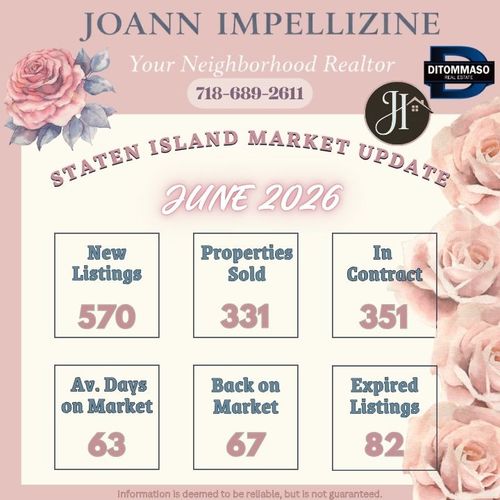
Staten Island Real Estate Market Update – June 2026: Inventory Continues to Grow While Buyer Demand Holds Strong
Explore the June 2026 Staten Island real estate market, including new listings, closed sales, homes in contract, average market time, and what the latest trends…
Read Article