
Winter Storms in NYC: How to Protect Your Pipes & Water Meter From Freezing
Winter storms in New York can be beautiful… until you wake up to no water, frozen pipes, or a burst line flooding the basement.
When temperatures drop below freezing for extended periods, pipes and water meters—especially in basements, crawl spaces, garages, or other unheated areas—can freeze quickly. And once that happens, the damage (and repair bill) can be significant.
The good news? A little preparation now can help you avoid a winter plumbing nightmare later.
Why Frozen Pipes Are a Big Deal
Frozen pipes aren’t just inconvenient—they’re risky.
When water freezes, it expands. That pressure can cause:
cracked pipes
burst service lines
water meter damage
leaks and flooding once the ice melts
Repairs can be expensive, stressful, and often require a licensed plumber—especially if the service line or meter is involved.
How to Protect Your Pipes & Water Meter Before a Freeze
A few simple steps can make a big difference.
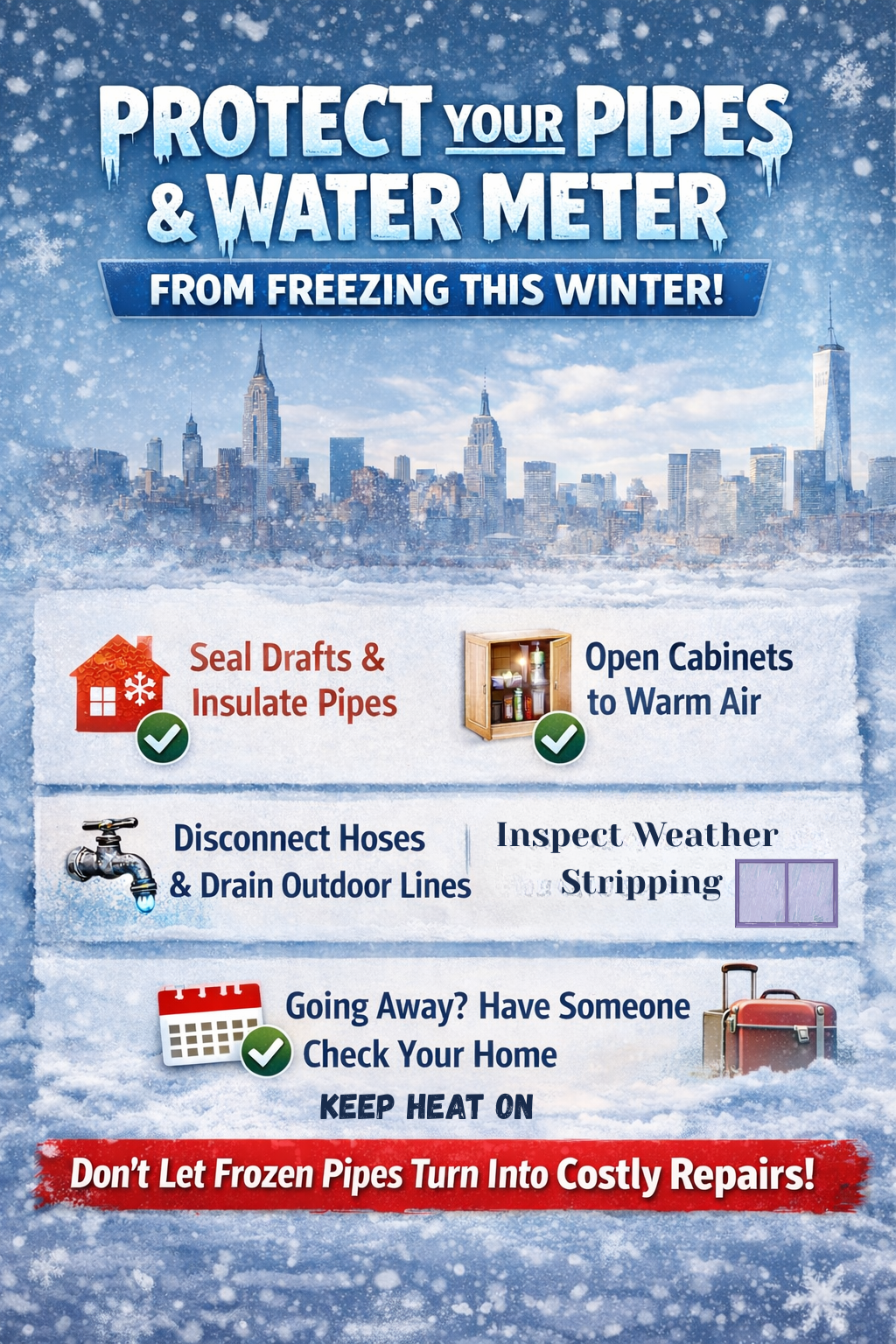
✅ Seal Out Cold Air
Drafts are one of the biggest culprits when pipes freeze.
Repair cracked or broken windows and doors
Seal drafts in basement areas
Close basement windows tightly
Consider storm windows for colder spots
✅ Add Insulation Where It Matters Most
Pipes in unheated areas need extra protection.
Insulate pipes near exterior walls
Eliminate drafts in crawl spaces
Use pipe insulation materials from a hardware or plumbing supply store
Pay extra attention if your meter is located in an unheated garage
✅ Keep Cabinets Open for Warm Air Circulation
If pipes or your meter are inside a cabinet against an outside wall:
insulate the wall behind it
open cabinet doors during very cold nights to allow warm air to circulate
✅ Protect Outdoor Water Lines
Outdoor water lines are extremely vulnerable.
turn off the water to outside faucets
remove hoses
drain remaining water from the pipes
✅ Don’t Leave Your Home “Silent” If You’re Away
If you’re traveling during cold weather, have someone check the property. It’s smart to:
turn on a faucet periodically
make sure heat remains on
confirm no drafts or leaks have developed
What To Do If Your Pipes Freeze
If you suspect a frozen pipe, act quickly—but safely.
Step 1: Open a Faucet
Turn on a faucet near the frozen area. This helps relieve pressure as the pipe begins to thaw.
Step 2: Apply Gentle Heat
Use safe warming methods like:
a hair dryer
a heat lamp
a small space heater nearby
Never use an open flame to thaw a pipe. It’s a serious fire hazard and can damage the pipe even more.
Step 3: Call a Professional If Needed
If the pipe won’t thaw or you notice a leak, contact a licensed plumber right away.
Bonus Tip for Staten Island Homeowners
Many Staten Island homes have basements and utility areas that become drafty during strong winds and deep freezes. A quick winter walkthrough can help prevent surprises:
check basement windows and doors
inspect weather stripping
feel around pipes for cold drafts
add insulation before the next storm hits
Final Thoughts
Winter storms are unpredictable—but frozen pipes don’t have to be.
Taking a few preventive steps now can help protect your home, avoid emergency plumbing calls, and keep everything flowing smoothly all season.
Check out this article next