
The Fed Raised Rates: What Staten Island Homebuyers and Sellers Should Know

The Fed Raised Rates: What Staten Island Homebuyers and Sellers Should Know
The Federal Reserve raised its benchmark rate—but mortgage rates do not move in perfect lockstep with the Fed. Here is what the latest decision could mean for your next move.
On September 16, 2026, the Federal Reserve raised the target range for the federal funds rate by one-quarter of a percentage point, bringing it to 3.75%–4.00%. For buyers and sellers, the important question is not simply what the Fed did—it is what happens next in the mortgage market.
According to Freddie Mac, the average 30-year fixed mortgage rate was 6.95% as of September 17, up from 6.76% the previous week. The 15-year fixed rate averaged 6.26%. These national averages provide useful context, but an individual borrower’s rate can vary based on credit, down payment, loan type, points, property type and lender.
Why Can Mortgage Rates Move Differently From the Fed?
The federal funds rate is the overnight rate banks charge one another. A 30-year mortgage is a long-term loan with a very different risk and time horizon. That is why mortgage rates can rise before a Fed meeting, fall after a rate increase, or remain relatively steady even when the Fed acts.
Markets constantly look ahead. If investors expect inflation to remain elevated or believe additional Fed increases may be coming, those expectations may already be reflected in mortgage pricing before the official announcement. Economic reports, employment data and global events can also move rates from day to day.
What Changed This Week?
The Fed increased its benchmark range by 0.25 percentage points. During the same week, Freddie Mac’s national average for a 30-year fixed mortgage moved from 6.76% to 6.95%. The two changes occurred near one another, but they are not a one-for-one cause-and-effect calculation.
What Could This Mean for a Monthly Payment?
Even a modest mortgage-rate change affects purchasing power. Here is a simplified example using an $800,000 purchase with a 20% down payment and a $640,000, 30-year fixed mortgage:
| Mortgage Rate | Estimated Principal & Interest | Monthly Difference |
|---|---|---|
| 6.76% | Approximately $4,155 | — |
| 6.95% | Approximately $4,236 | About $81 more |
Example is for illustration only and excludes property taxes, homeowners insurance, mortgage insurance, association fees, lender fees and other costs. It is not a loan quote.
What Staten Island Buyers Should Consider
A rate increase does not automatically mean buying is the wrong move. It means buyers should make decisions using current numbers—not the rate they remember from last year or hope to see next spring.
- Refresh your preapproval. Ask your lender to calculate your comfortable payment at today’s rate and at slightly higher and lower rates.
- Compare the full loan cost. Look at the interest rate, APR, points, closing costs and whether a temporary or permanent buydown makes sense.
- Keep the home price in perspective. A lower rate may not help if increased competition later pushes prices higher.
- Protect your flexibility. Buying within a comfortable budget can leave room to refinance if a worthwhile opportunity develops later.
For Buyers
Focus on the payment, cash needed to close and how long you expect to own the property. A strong lender and a current preapproval are essential when rates are moving.
For Sellers
Affordability affects buyer behavior. Accurate pricing, thoughtful presentation and realistic negotiation become even more important when monthly payments increase.
Should Buyers Wait for Mortgage Rates to Fall?
No one can reliably predict the perfect week to buy or lock a mortgage rate. Waiting may produce a lower rate, but it can also bring higher prices, fewer suitable listings or more competition. The better question is whether the home, payment and timing make sense for your own plans.
A buyer who finds the right property at an affordable payment may decide to move forward now. Another buyer may need time to reduce debt, increase savings or improve credit. Both can be reasonable decisions. The strategy should be personal, not driven by a headline alone.
What the Fed Increase Means for Staten Island Sellers
Higher borrowing costs can reduce what some buyers qualify for, especially in price ranges where purchasers are already stretching their monthly budgets. That does not mean demand disappears. It means buyers may compare homes more carefully and react more strongly to condition, price and value.
Sellers should pay close attention to recent neighborhood sales, active competition and current buyer feedback. A pricing strategy based on what the market is doing now is more effective than relying on an older sale completed under different financing conditions. You can follow the latest local activity on my Staten Island real estate market reports page.
The Bottom Line
The Fed’s September increase matters, but it is only one piece of the mortgage-rate picture. Buyers should obtain current, personalized loan figures, while sellers should consider how affordability may influence pricing and negotiations. A thoughtful plan matters more than trying to outguess the market.
Frequently Asked Questions
Did the Federal Reserve raise mortgage rates?
No. The Fed raised the target range for the federal funds rate. The Fed does not directly set fixed mortgage rates, although its policies and inflation outlook influence the financial markets that affect mortgage pricing.
Will mortgage rates rise by the same amount as the Fed increase?
Not necessarily. Mortgage rates can move more, less or in the opposite direction because they respond to bond-market conditions, inflation expectations, economic data and investor demand.
Is it a bad time to buy a home on Staten Island?
That depends on your finances, housing needs, expected time in the home and available inventory. A buyer should evaluate the total monthly payment and obtain a fresh preapproval before deciding.
Can a buyer refinance if mortgage rates fall later?
Refinancing may be possible, but it is not guaranteed and usually involves qualification requirements and closing costs. Buyers should be comfortable with the payment they accept today rather than relying on a future refinance.
How can higher rates affect Staten Island home sellers?
Higher rates may reduce some buyers’ purchasing power. Well-prepared homes with market-supported pricing can still attract serious buyers, but sellers may need to be especially attentive to competition and financing-related negotiations.
Planning a Move on Staten Island?
Whether you are buying, selling or deciding when to make your next move, I can help you look beyond the headline and understand what today’s market means for your particular situation.
Talk With JoannSources:Federal Reserve, September 16, 2026; Freddie Mac Primary Mortgage Market Survey, September 17, 2026. This article is for general informational purposes and is not financial, tax or lending advice. Mortgage rates and loan terms change and vary by borrower and lender.
Check out this article next
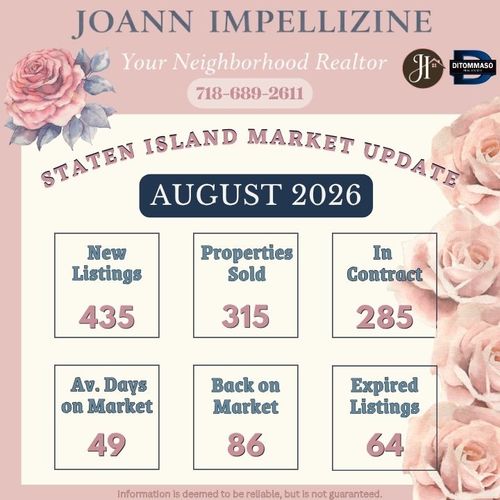
Staten Island Real Estate Market Update – August 2026
The August 2026 Staten Island real estate market remained active with 435 new listings, 315 closed sales and a median sold price of $765,000. See…
Read Article